Merry MacLellan
Report
Every October when the Mississippi heat begins to cool, Mississippi University for Women hosts the annual Eudora Welty’s Writer Symposium and invites authors with ties to the Southeastern region of the country to participate and share in the changing literary landscape of the South, all the while reflecting on the works of Welty, an alumna of the university.
While featured ideas and themes have changed over the years, one element remains unchanging: the significance of the land. Once a key element in different Welty’s stories, the tradition of centralizing the land and setting has remained relevant to many of the writers attending this year’s symposium.
With this year’s theme, “Like a Visitor from Nowhere: Encounters in the Uncanny South,” the land takes on a different appearance in the collection of stories being showcased at the symposium. The land becomes a living character and plays a strange part in the stories being told.
As a scholar in Southern literature and Welty, Dr. Sarah Gilbreath Ford attends this year’s symposium as the winner of the Eudora Welty Prize for her book, “Of Women and Water.” For Ford, years of research on the topics have given her an insight and perspective into the landscape in literature of the South — especially in viewing the way Welty wrote about Mississippi.
“I think one way in which she is brilliant is her attention to place,” Ford said. “She thinks deeply about places, about communities and how they interact in certain places. About historical context for how people are acting in certain places. And so, I think her work, both her literature and her photography, is many things, but it is a record of a place.”
Her book is a literary study of Welty’s usage of submersions in water as a spiritual baptism to signify the coming-of-age for many of her female characters. Nature takes a role that is usually reserved for social events in the trope.
“What I argue in the book is that Welty writes scenes of nature, in which nature is uncanny, specifically where nature is agentic,” Ford said. “Meaning nature has agency in ways we don’t formally think of nature having agency. So that it's not just characters doing things to nature, or characters doing things with nature as a backdrop. But nature has agency, nature is doing things as well.”
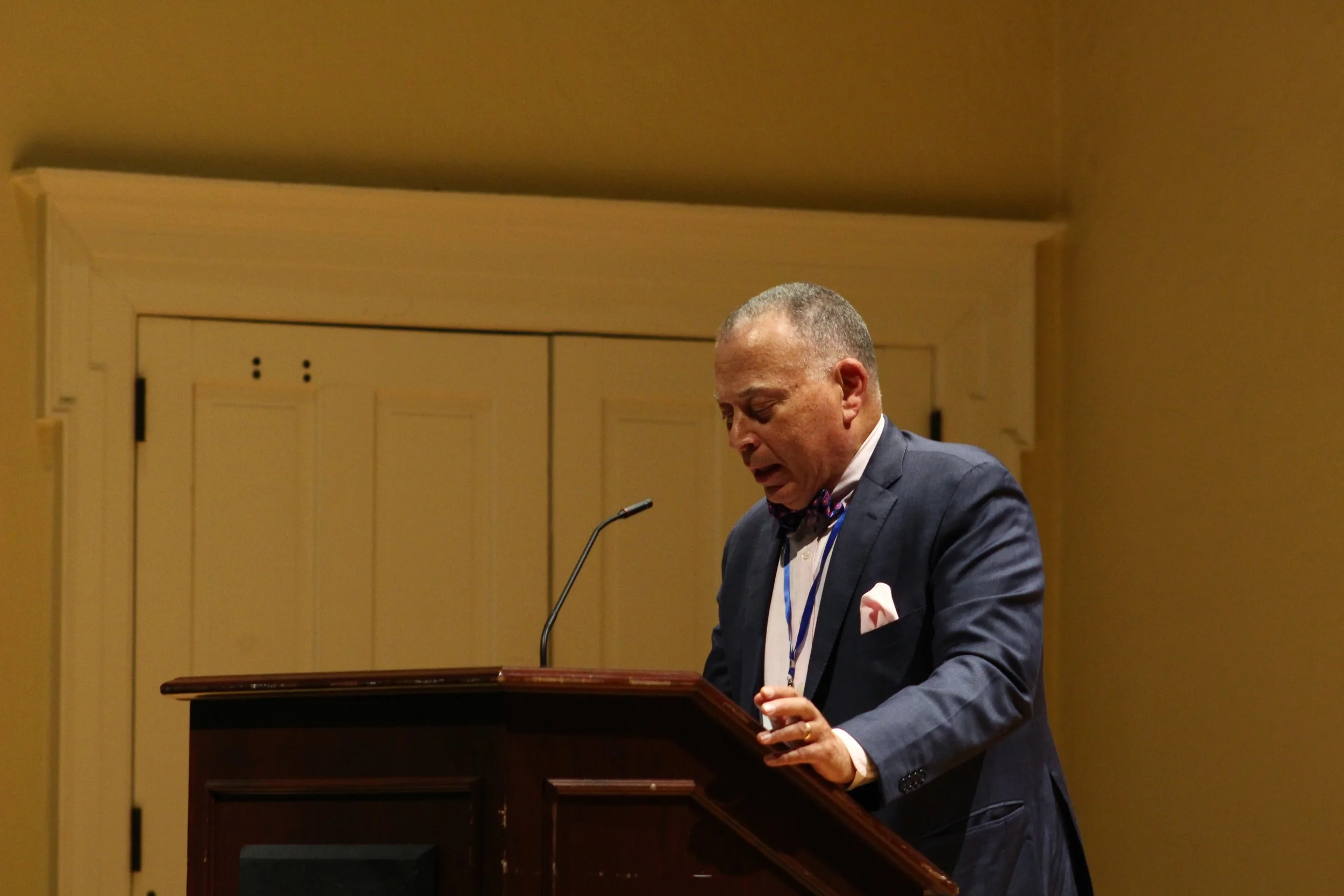
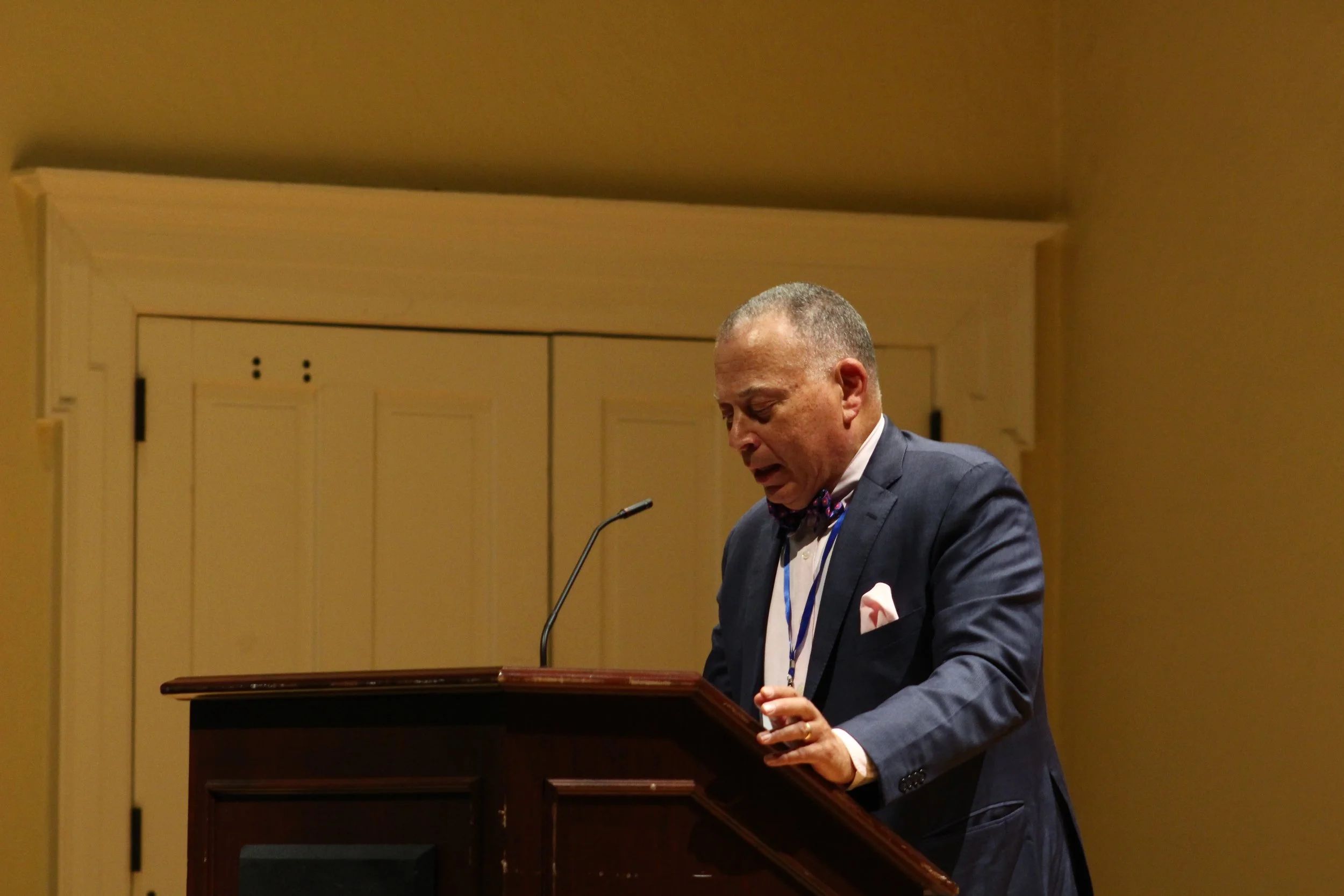
For other symposium writers, their story’s relationship with the land is used to reconcile with the history of the South. In a place haunted by its poverty and bleak history, writing has become a solution in expressing the complexity of emotions for many natives. The keynote address speaker for the symposium, W. Ralph Eubanks, is among those writers.
The keynote address by W. Ralph Eubanks
Photos by Merry MacLellan
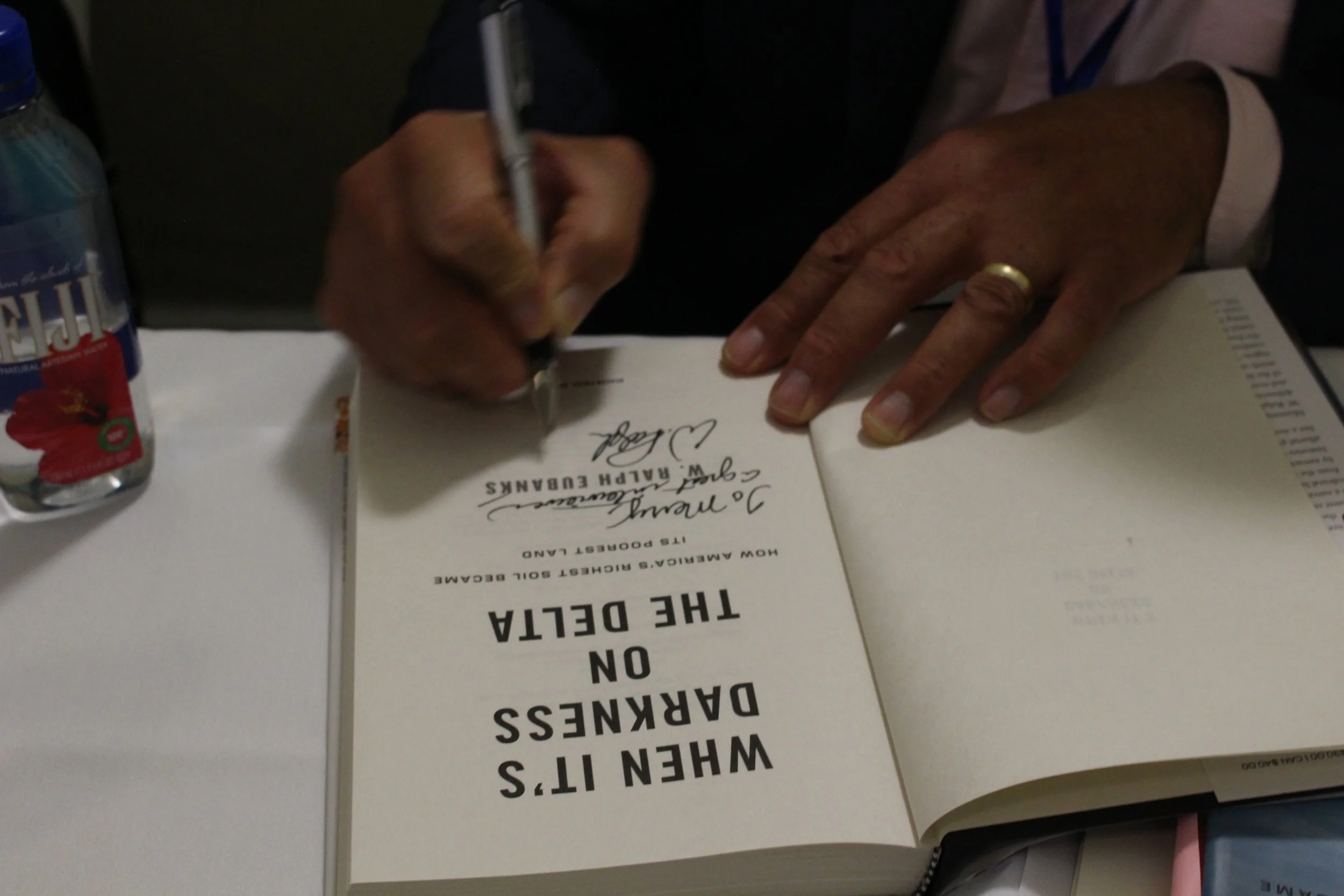
Raised in south Mississippi, Eubanks’ family roots belonged to the Delta until they left in the wake of Emmett Till’s murder. For him, writing and researching the Delta and its communities was a key to his own understanding of the place. He also writes to try to change the poor narrative the region often receives in his collection of essays, “When It’s Darkness in the Delta.”
“The Delta is a place that is, you know, it's this bigger-than-life topic and has this huge mythology,” Eubanks said. “So, for me it was kind of tackling the myth of the Delta, as well as bringing in the personal and the historical.”
Throughout his writing experience, Eubanks expressed that, despite writing non-fiction, he often thought about the idea of place in his stories similar to that of Welty. The landscape of his works is not just a background, but an archival source to set his story and help him understand the people and their mythos.
“I hope that people will begin to think about the Mississippi Delta in a new way, change their way of seeing the Delta,” said Eubanks. “That’s a big theme of this book is how do we change people’s ways of seeing the Delta. And I say to change what we see about the Delta, we must change what we know about the Delta.”
Author David Armand, attending the symposium for the third time with his novel “Walk the Night,” voiced similar feelings about the importance of the environment in his novels and Southern literature. Through his time learning about Southern literature, he said he was able to see his own experiences of poverty and harsh environments written in a way that encouraged him to write about the landscape he was familiar with.
“Especially in my earlier books, I would say that landscape is so integral to the story in terms of its almost like its own character I guess,” Armand said. “In the way that my actual people in my books act or react is very often a result of their environment.”
W. Ralph Eubanks signing a copy of his book
Though the South that Welty wrote about has changed in many ways, social, cultural and even in appearance, it is evident that the attention to the land has not. Writers across the generations and communities are coming together at the symposium and still acknowledge how the landscapes of the region impact the stories told in similar ways to the symposium’s namesake.