
Lifestyles

Opinion: Making memories and why Winter Formal matters

Emma Stapp
Writer

For many people, some of their favorite memories from high school include dances, formal events and nights spent celebrating with friends. However, once graduation comes, opportunities to experience moments like that can become less common. College students often find themselves juggling classes, work, family responsibilities and the pressures of new adulthood, leaving little time to simply relax and enjoy themselves. That is why events like SPB’s upcoming Winter Formal are about more than dressing up and dancing. They provide college students with the chance to reconnect, build friendships and create memories that last long after the end of the night.

One of the biggest benefits of hosting social events is the opportunity to build a sense of community. College can sometimes feel overwhelming, especially for students who are adjusting to a new environment, making friends or finding their place at their university. A formal event gives students from different backgrounds, majors and social circles a chance to come together outside the classroom. Whether attending with a group of friends, a partner, or even going solo, students have the opportunity to connect in a fun and welcoming atmosphere.

Another important aspect of the Winter Formal is the positive impact that it and similar events can potentially have on students’ mental wellbeing. College life comes with plenty of stress, from exams and assignments to financial hardships and changing social climates. Having something to look forward to can give students a well-deserved break from their everyday routines. Taking a night to dress up, enjoy music, dance, laugh and spend time with others can help students recharge. 

While a formal event cannot eliminate the challenges of college life, it can provide a refreshing reminder that life is about much more than deadlines.

Winter Formal also gives young adults a chance to experience traditions that many may have thought ended after high school. There is something incredibly special about having a reason to dress up, take pictures, enjoy a decorated venue and celebrate with friends and peers. As people grow older, social events can become more difficult to coordinate. Work schedules, classes, family responsibilities and other commitments make it harder to gather everyone in one place. Events like these offer a designated time for people to step away from their busy schedules and simply enjoy being young. 

Along with providing entertainment, formal events can help students develop social connections and strengthen existing relationships and friendships. Meeting people in a fun, exciting setting can make it easier to form relationships that may eventually extend past the event itself. For students who are new to campus and looking to expand their social circles, attending a formal can be a simple way to become more involved in campus life. These shared experiences create a stronger bond between students and their college community.

Perhaps most importantly, events like Winter Formal remind students that adulthood does not mean giving up fun, excitement, or celebration. There is often pressure on young adults to constantly focus on their future, career establishment and degrees. While those goals are undoubtedly important, enjoying the present is just as (if not more) valuable. College is a unique chapter of life, and the memories made during these years can be some of the most meaningful in a person’s time on Earth.

At the end of the day, Winter Formal is about more than a dance. It is about community, friendship, celebration and making memories during a stage of life that passes by quicker than many people even realize. High school may be over, but our youth is far from it. College students deserve to celebrate, connect and take in the moments that make these days unforgettable.
Beyond the Stage: The stories of student performers at The W

Jaelyn Grant
Reporter

Every performer has a story, and every story begins with a different path. Whether through encouragement, personal discovery or a desire to express themselves, each journey has led a student toward the stage.

At Mississippi University for Women, student musicians develop their talents through rehearsals, performances and opportunities to create music.

An audience hears singers, instruments and harmonies that fill a performance. What they may not know are the experiences that inspired the musicians standing before them.

When the Stage Called

Long before the applause, there may have been a teacher who recognized a student’s potential, a song that sparked curiosity or a moment when music became a way to express something difficult to put into words.

For music therapy major Trinity Garvin, encouragement came from an elementary school music teacher who recognized her talent and introduced her to competitions and community performances.

“He saw something in me that I didn’t see in myself,” Garvin said.

Those early performances became lasting memories, allowing her to experience the excitement of sharing music with an audience.

Music carries more than a collection of notes. A melody can express sadness, joy or affection, while the interpretation of a composition allows a musician to communicate the emotions behind it.

Understanding those emotions is important to music education major Duncan Nobach.

“I love the different types of things that you can express through music,” Nobach said.

He enjoys examining compositions, including how composers interpret poetry and communicate emotions through music.

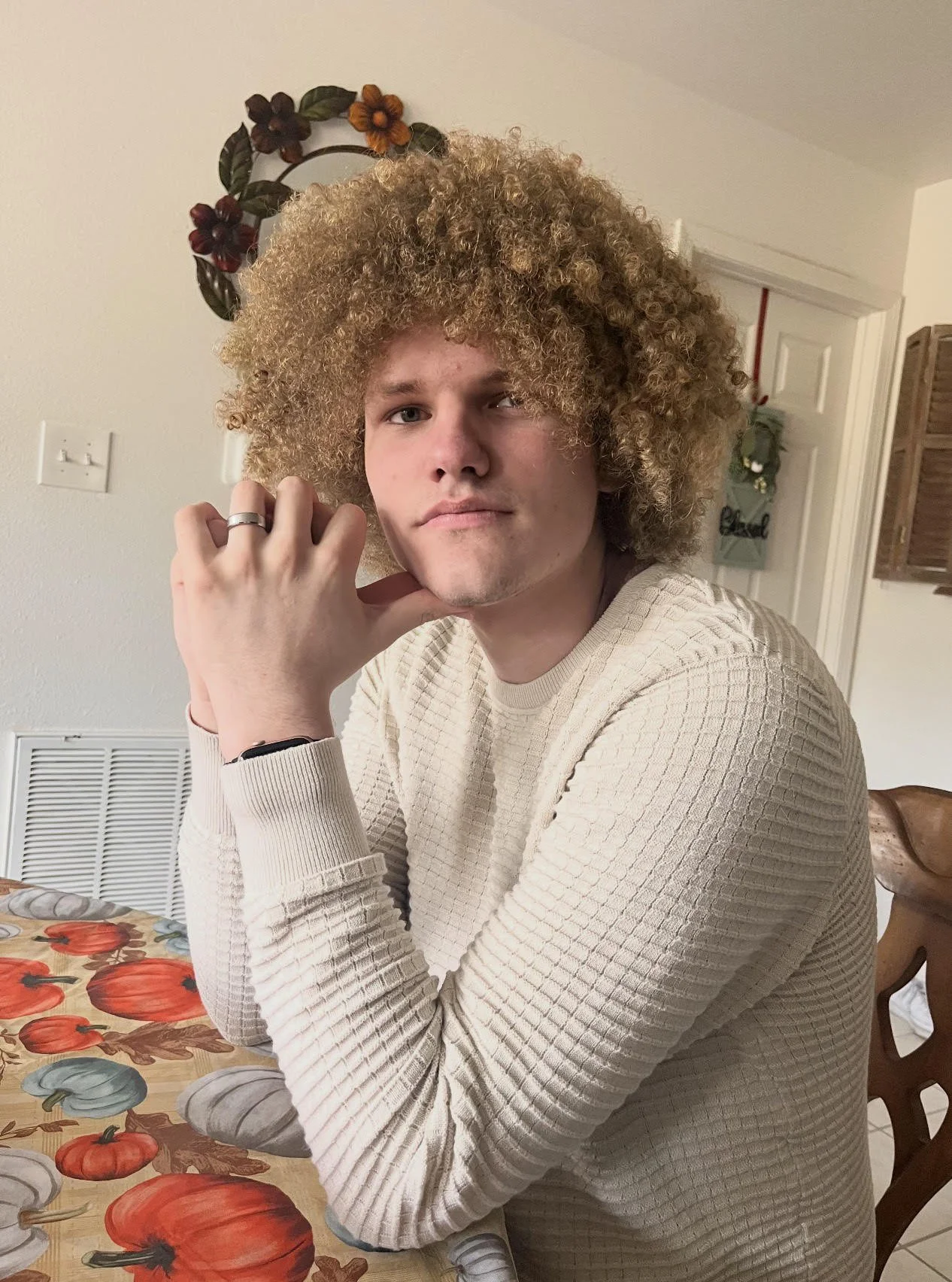
Music education major, Duncan Nobach.
Photo by Jaelyn Grant

Music can also provide another form of communication when words feel difficult to find.

Music composition major Devan Knipe said her interest in music was influenced by difficulties with social interaction and her desire to connect with others.

“Music is very emotional. I would consider it to be like a universal language,” Knipe said. “There’s something for everyone, and it just kind of fosters some empathy that maybe you wouldn’t have without it.”

The connection between a musician and music becomes visible through performance, but what audiences see is only part of the experience.

Beyond the Applause

Behind a song are rehearsals, hours spent learning musical passages and decisions about expressing emotions. Even after learning the notes, the challenge of communicating their meaning remains.

Garvin said one of her biggest challenges is ensuring that her facial expressions match the emotions she is singing about.

She especially enjoys musical theater, where acting choices and audience reactions contribute to the performance.

An audience’s response can make a performance memorable. Laughter, applause and expressions of enjoyment allow musicians to see how listeners receive their work.

Garvin recalled performing a French piece during a singing competition before her family, former classmates, teachers and other musicians.

She became a finalist and won first place in her category, marking a memorable accomplishment in her performing experience.

Yet the excitement of performing does not always erase the nervousness that comes before stepping onto the stage. Questions about memorization, preparation and possible mistakes can occupy a musician’s thoughts even after hours of practice.

Nobach said he experiences much of that nervousness before performing rather than while standing onstage.

“Whenever I get on stage, it’s easy for me to just let go of all my stress and just do it,” Nobach said. “But it’s the stress that leads up to it.”

He prepares by studying the melody and harmony of a piece, rehearsing with an accompanist and concentrating on the emotions he wants to communicate.

For some musicians, sharing music also means watching another person bring their original ideas to life.

A composition begins as a musical idea that develops into written notes and scores. When performers interpret those notes, the composer can hear the finished work.

Knipe experienced that opportunity when one of her original compositions for soprano and piano was performed at The W’s Music by Women Festival last year.

Hearing experienced musicians perform her work was intimidating, she said. She also described the opportunity for students to have their compositions performed at the university as a privilege. Her experiences at The W have encouraged her to explore opportunities that once felt uncomfortable.

“It’s definitely pushed me out of my comfort zone, which is good,” Knipe said. “Uncomfortable but necessary.”

Beyond performances, the music department provides opportunities to develop through faculty guidance and collaboration.

Nobach credited professors and students with contributing to his growth. Knipe described the department as a supportive environment that encourages students to perform.

Women owned businesses in Columbus

The owners of two local businesses hope to improve the community and the lives of their customers while turning a profit in Columbus. Maypop Spa offers a variety of massages performed by massage therapists. The spa also serves as a physical retail space for Humble Reign, a new online fashion retailer. Both businesses are owned by women, and they see their businesses as fulfilling needs in the community.

Holiday shopping continues to evolve

The holiday season is rapidly approaching, and, for the second year in a row, it is going to be occurring during the pandemic. For many that means holiday shopping has already begun. With online shopping already having become a mainstay in our world, people have the ease of being able to find the perfect gift with just a few clicks.

Fall Semester Stress

Students, faculty and staff have been through a lot since Spring 2020. There were hopes that this semester would be back to normal — and there are a lot more face-to-face classes and social activities this Fall — but safety precautions are continuing because of the spread of the Delta variant of the COVID-19 virus.

Study abroad provides immersion into learning

The time a young adult spends in college is often called one of the most influential and important stretches of his/her life. New information and the excitement of beginning to stretch out their wings apart from their parents’ watchful presence creates within young adults a fast-and-furious independence that only grows with each passing year they spend at their institutions of choice.

College can be challenging for first generation students

Some students are prepared by their parents when it comes to leaving home. Many students who come to college get briefed by their parents on what to expect, especially if at least one of the parents has graduated from college before them. However, things are different for first-generation college students who are trailblazers in their families.