Merry MacLellan
Reporter
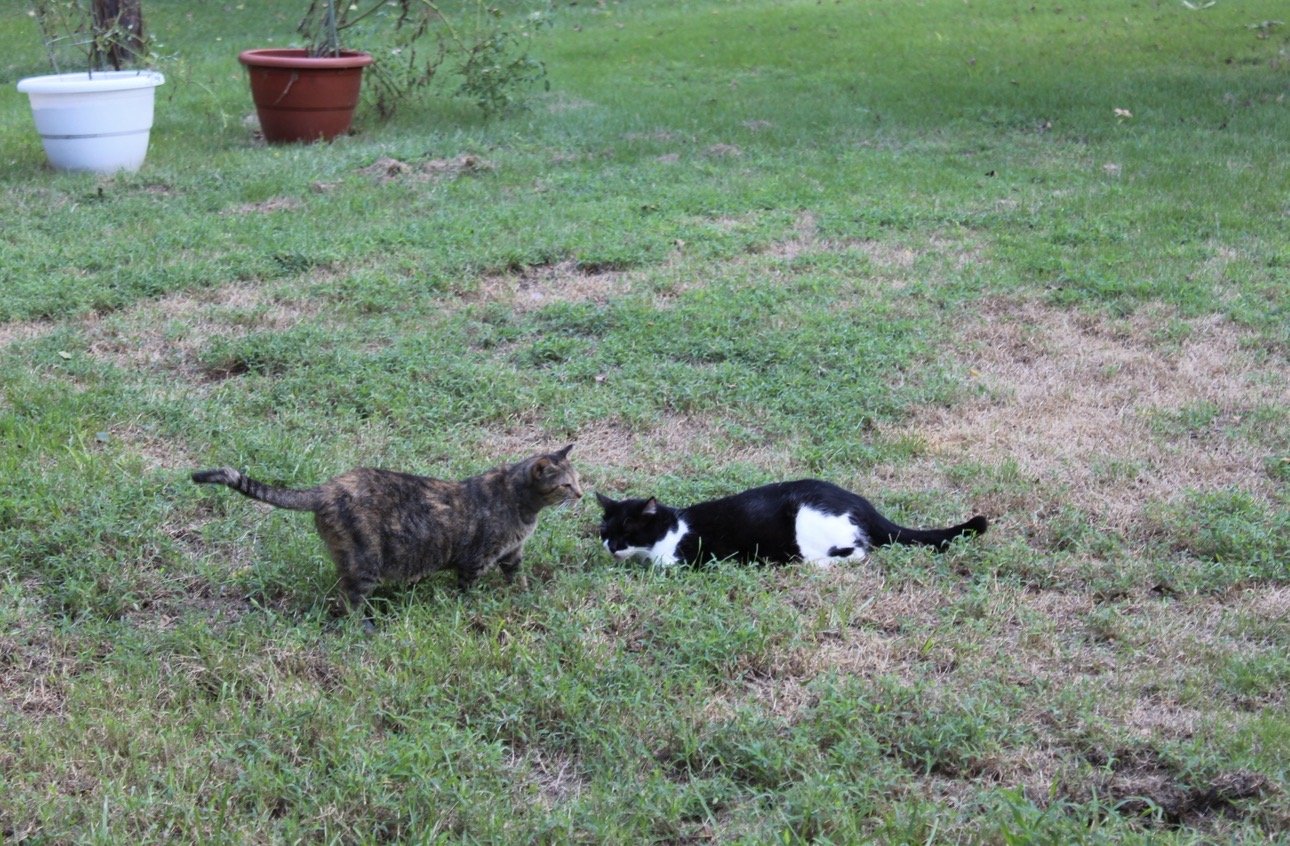
On the front steps of Reneau Hall at Mississippi University for Women, a small, black and white cat may be seen, cautiously watching as students go past. A few acknowledge her existence, but to most she goes unnoticed, unmonitored. A blip in their vision.
She is feral. One of the many cats that call the foundations of The W campus buildings home. A small percentage in the larger population of stray and feral cats in Columbus, Mississippi. Residents of the community without a voice or protections. Here from cycles of breeding left unchecked for too many generations of kittens. If nothing is done, she and her future kittens will live short, fearful lives.
Unaltered, a female cat can have a litter every four months. Those kittens can then have their own as young as four months. According to the Lynchburg Humane Society, one unaltered female cat can have more than 100 kittens in her lifetime.
Kittens without homes, a steady supply of food and subject to sickness and disease. A man-made cause in need of a man-made solution.
In a place like Columbus, in a state with no spay or neuter laws nor pet ownership restrictions, some members of the community have decided it’s time for a change. This decision can change the lives of the kittens in the storm drain or the tomcat slinking around the Waffle House.
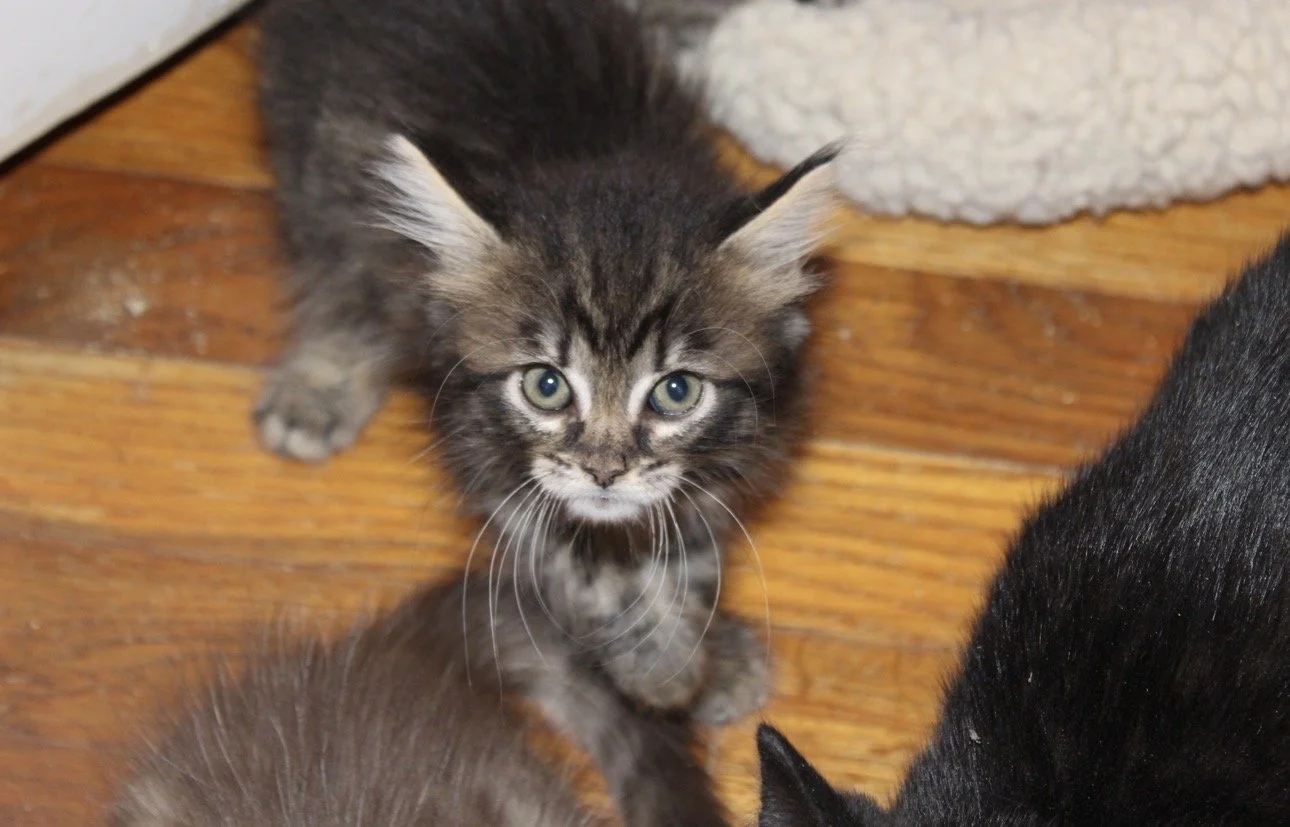
A growing kitten rescued by Colony Cats.
Photos by Emma Caroline Brown
Trap, Neuter, Release
Since 2019, Terri Doumit has led Operation Colony Cats-- a nonprofit organization that has been the main vehicle of change, started by a few women who had the courage and conviction to step up and begin performing Trap, Neuter, Release in Columbus.
It began with an infestation of cats at a gas station in East Columbus that Doumit and a few other women had noticed. As is the case with most colonies, someone was setting out food, and cats began to congregate. From there, the kittens came by the dozen, found in strange places like the gas station roof.
“I remember looking at both of the ladies and saying, ‘hey, why don’t we see if we can get them fixed so they won’t have all these kittens?’” Doumit said. “And they were like, well, where will we go?”
At the time, Doumit and the other women were unsure what resources were available. The surgery to fix a cat often comes with a hefty bill, a reason why many kittens are born and dumped. The other difficulty was catching the feral cats.
Motivated to deal with the gas station cats, Doumit visited the Columbus Lowndes County Humane Society to see if there were any options for controlling the colony population. From them, she learned about TNR which motivated the mission for OCC.
TNR is a three-stage process dedicated to the control and betterment of the feral population.
It begins with trapping. Humane traps are set up in locations where the colonies are present. Then food is used to lure the cat in and a trapper keeps watch. When a cat takes the bait, the trap is closed and secured.
From there, the cat is taken to clinics or shelters where it is spayed and neutered from low to even no cost. For OCC, they organize these surgeries with local clinics including Oktibbeha Humane Society and the Mississippi State University Veterinary School.
If a cat is deemed feral, they move to the next stage. Sporting a tipped ear, a universal sign in America that a cat has been fixed, it is returned to its original location.
While putting a clog in the birth rate, TNR provides other benefits in a feral cat’s life. It cuts down on the spread of diseases such as Feline Immunodeficiency Virus and Feline Leukemia Virus. For the males, it alters their territorial behaviors that are responsible for the majority of fights, promoting more stable colonies.
Since 2019, OCC has facilitated 8,000 cases of TNR. According to Doumit, 90% of those cats have been from the Columbus area.
Colony Changes
Jill Johnson, the vice president of OCC, is a colony caretaker while fostering kittens. She wears a red cat sweatshirt while sitting in her dining room as two kittens wrestle in a cage by the table. Currently, she has seven fosters.
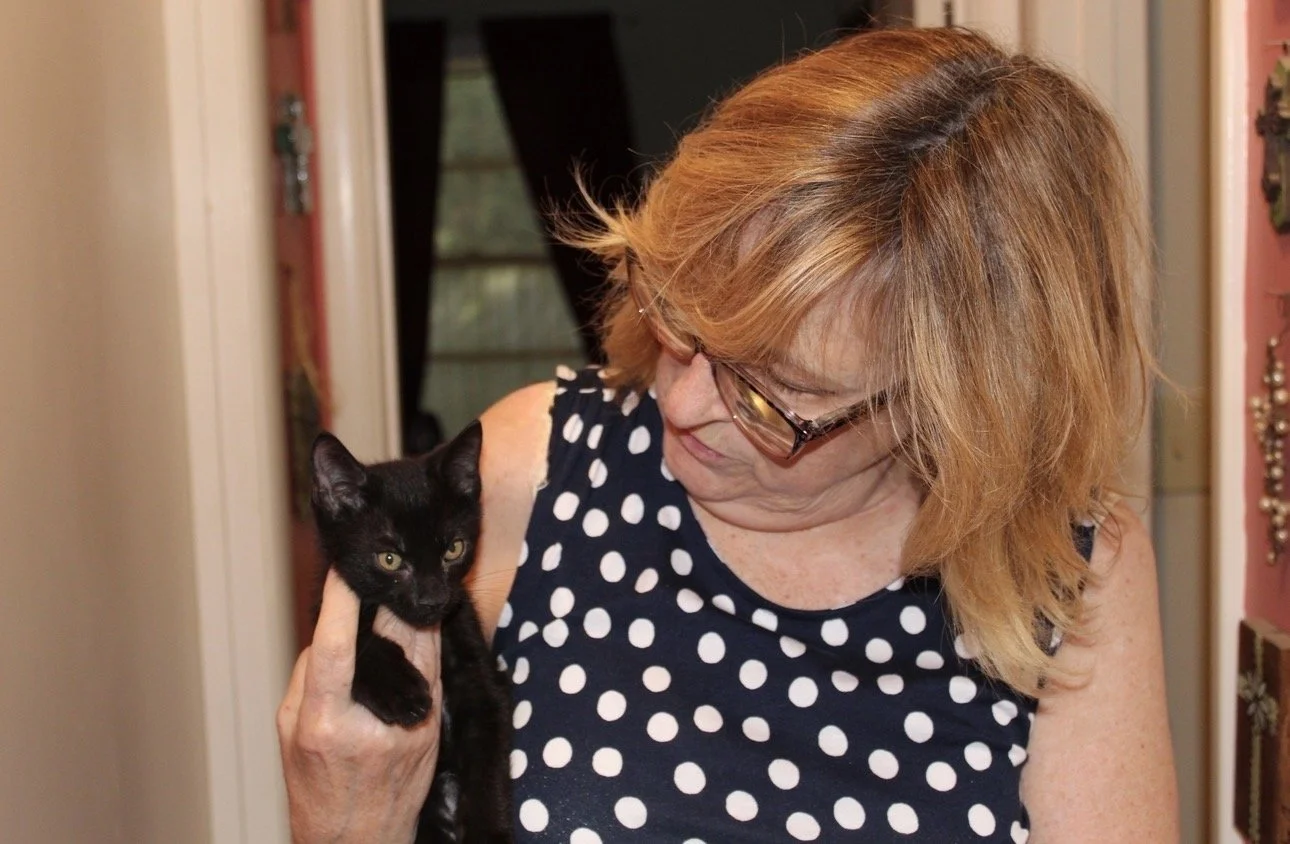
Johnson with one of her fosters.
Before she started working with OCC, Johnson was attempting to take care of the colony on her own. However, it was a struggle to catch and fix them, so kittens were always appearing. With OCC’s help, she was able to catch the last female cat and put a stop to reproduction.
“Thank the good Lord above,” Johnson said.
As a colony caretaker, Johnson sees how TNR improved the quality of life for the feral cats. She isn’t worried about kittens in the yard. Instead, her colony, along with other colonies that OCC has helped, are stabilizing and shrinking.
“You have got to do the TNR,” she said.
On the front steps of her home, Johnson can often find one of those colony cats who acts as a testament to that. Hank is a spayed tomcat, with an orange and white coat, a bobbed tail and a funny little face. As one of the remaining colony cats, Hank walks around with the clipped ear but is quick to scurry away if anyone but Johnson is nearby. It would be easy enough to mistake Hank for a housecat given his glossy coat, lack of wounds and healthy weight.
Hank is a testament to the success of TNR.
Why it Matters
Outside of bird conservationists, overworked animal shelter workers, and animal control officers responding to calls, most people are not aware of the effects a feral cat can have in an environment or community. Compared to other animals or plants, the feral cat might not be thought of as an invasive species. But they can ruin the balance of an ecosystem.
Since cats are not native to Columbus, they introduce a power imbalance to the environment that the native prey is unable to cope with. They bring new diseases and hunting tactics that local birds and rodents are unfamiliar with, Dr. Travis Hagey, an associate professor of biology at The W, explains.
“Think of an ecosystem as all these species that interact together,” he said. “All the blocks are built to fit together, and then you jam a new block in.”
“It can kind of mess up the whole system.”
Without intervention, the suffering is unrelenting. According to Hagey, this is not a situation that can be left up to nature to fix the course. It will take thousands of years before that equilibrium is naturally formed at the current rate of which feral cats populate. And not without the loss of several native species.
“I think it’s 1,000% our responsibility,” he said.
His opinion is formed from studying wild animals, knowing that the life they lead is harsh because of the constant threat of diseases, loss of shelter and unreliable food sources. For these feral cats, who in one way or another were forced into this lifestyle, it’s not a way to live.
All Paws on Deck
For Doumit and Johnson, the greatest problem they’ve seen with TNR efforts have not been the cats, but the people. There have been many instances where a volunteer has attempted to arrange trappings with someone at a colony only to be promptly turned away.
Not because these people do not care about these cats. Quite the opposite. Instead, they fear what might happen to the cats. In many circumstances, when feral cats are trapped, they do not return to the colony and caretaker. Instead, they often end up in a shelter where they are unable to be adopted and then euthanized.
TNR, while not a new concept, is still unfamiliar to many. They are skeptical of someone else dealing with the cats, whether out of a fear of them not being returned or maybe the momentary joy a kitten brings. That lack of information and proper care, however, is often what stands between a colony and stability.
It’s easy to feed out of adoration and pity. The real kindness comes in taking responsibility and making a change. From there, fewer kittens are born and suffer.
For that to happen, people must step up and volunteer. For OCC, they don’t have nearly as many people in the organization as they need to go further in their efforts. The colonies can only stabilize and shrink as much as they are cared for.
“I think it’s going to take more education,” Doumit said. “Lot more boots on the ground, just talking about, you know, all of us coming together as much as we can.”